In this course, participants will be able to:
- Describe the types of considerations that early learning teachers examine when planning outdoor play spaces.
- Examine how and why inclusive practices, including universal design principles, are used when designing outdoor play space.
- Discuss varying perspectives on design features that guide the planning and assessment of outdoor play spaces in early learning programs.
- Examine how the groupings of outdoor play spaces influence children’s level and depth of play, behaviours and socialization processes.
- Outline the significance of incorporating gardens in children’s outdoor play spaces.
- Examine the roles, attitudes, and influences that early learning teachers have on designing outdoor play.
Not Enrolled
Module Includes
- 8 Lessons
- 18 Topics
- 2 Quizzes
Login
Accessing this module requires a login. Please enter your credentials below!
Responses
You must be logged in to post a comment.
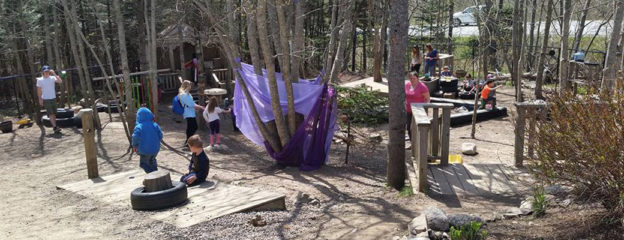
Designing outdoor play spaces involves thoughtful planning beyond just placing materials. Key considerations include pathways, plants, placement of loose parts, cultural diversity, and children’s interests. A well-designed space promotes engagement, socialization, exploration, and learning. Poor design leads to chaos, behavioral issues, and decreased motivation, limiting risk-taking and problem-solving. Effective design enhances children’s experiences and supports development across multiple areas.
The intentional design of outdoor place area play an important role in children’s daily interactions, children develop best when given plenty of out door play opportunities, the outdoor play design must be intentional and child centered, the quality of outdoor place program is directly related to children’s behaviors, adding a garden in outdoor play can provide children with positive learning dispositions, such as seeking, participating, persisting, caring, and the joy of playfulness, also give them the sense of belonging and when asking families and community for their participation, we bring the culture and community together.
Designing outdoor play spaces is a thoughtful process that goes beyond material placement; it requires intentional planning to foster deep play, exploration, and social engagement. This module highlights the importance of inclusive design, universal design principles, and the role of natural elements in supporting children’s learning, risk-taking, and well-being. By thoughtfully designing outdoor environments, early learning teachers can create inviting, responsive, and developmentally rich spaces that enhance children’s curiosity, creativity, and connections with nature.
Lots of valuable information that I wish all teachers had to learn.
Learn their own boundaries
Definitely some great ideas in this module. I learnt a lot about outdoor play design.
Wonderful ideas.
SO much that is new to me – definitely doing some of this but didn’t know the terminology.
This will be very practical for me!
very great information in this module
I enjoyed learning about outdoor designing play space in this module. I learned so many new ideas while learning.
I enjoyed this macho as it gave me lots to consider when designing my own place space.
Lots of positive things to think about in this chapter, definitely enjoyed:)
agree , this module has a great ideas.
Any space when designed correctly and appropriately has its benefits and when help is provided through these kinds of modules ECE’s benifit alot.
Designing indoor or outdoor has a deep implication on deciding the way the children will learn and develop. Indeed, a very useful module for ECEs.
Designing outdoor play areas is enjoyable, and it’s wonderful to watch kids interact and have fun there. The kids are able to plan and produce their own journey. Excellent data
Excellent chapter with so many helpful ways to asses our outdoor play space.
“The outdoor play environment has a significant impact on the type of play and behavior of children. For example, if there are trampolines or trees that children can climb, it enhances their courage. On the other hand, if loose parts are available in the play environment, it steers their play towards enhancing creativity.”
This has give us so many informations and ideas about designing outdoor
I agree this module had a lot of great information.
I’d live to have a blank space to create the perfect outdoor soace
Nancy Penney
Outdoor play spaces a fun to design and great to see how children interact and play in outdoor play spaces. The children can design and create their own adventure. Great information
Another informative module.
Lots of great information in this module.
Another very informative amd beneficial module.
lots of great information in this module
I agree, there was a lot of good information this module!
Very informative this chapter, an educator need all those tools to know how to do best his job.I learned a lot , detail are very important to know.